The use of CAD has made drawing faster and easier to modify compared with hand drafting, moreover, when printed out, it looks clean and shows no sign of ever being modified.
But it still takes us some time to modify the drawing even with CAD, so we might as well avoid the unnecessary modifications. The following are 9 don’ts of CAD drawing for your reference.
1.Don’t modify the scale of single line easily in the Properties Manager
We usually need center lines when we start drawing, but the scale may be incorrect and what we see are solid lines, not center lines. The LTSCALE changes the line type of all the lines in a drawing and we can only modify the scale of line type of specified lines in the Properties Manager after selecting objects.
2. Don’t modify the properties of single drawing element easily
3. Don’t assign the LineWidth to single object easily in the Object Toolbar by force
4. Don’t put objects on other layers than the “0” layer when creating blocks easily
5. Use SPLINE command as less as possible to create lines
6. Don’t explode the object of Size Dimension or change the values separately and easily
7. Don’t use MTEXT easily
8. Try not to draw duplicate lines
9. Don’t explode blocks easily
The above are tips online and my opinions on them, now I want to share another 9 don’ts that I can come up with.
- Don’t save drawings in 2004 version or under if not for special needs
- Don’t add all the font files to the FONTS category
- Don’t always open all the Snap Modes
- Don’t use true color easily
- Don’t put graphics on DEFPOINT layer by mistake
- Don’t give blocks random names

7. Don’t set the precision of arc VIEWER too high
8. Don’t put multiple drawing frames in the layout space

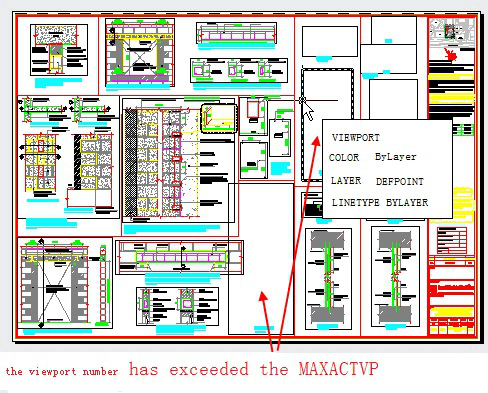
9. Don’t put too many viewports in one layout space
The viewport of layout is mainly for printing, but some designer has used it to put drawings and I’ve heard someone ever put hundreds of viewport in the layout. CAD application itself has limited viewport, the variant is MAXACTVP(the biggest activated viewport)
I’m just trying to let everyone make as fewer mistakes as possible in CAD drawing, in this way, we can make full advantage of CAD and therefore avoid unnecessary trouble.
Discover more from Gstarsoft's Blog
Subscribe to get the latest posts sent to your email.