Across Europe, construction and engineering companies are facing a growing challenge: how to modernize design workflows without disrupting the CAD practices that continue to support day-to-day operations. As BIM adoption accelerates and digital transformation requirements increase, many organizations find themselves caught between two realities. On one hand, clients and public authorities increasingly expect digital collaboration, model-based delivery and interoperability. On the other hand, CAD and DWG-based workflows remain deeply embedded in everyday engineering and construction processes.
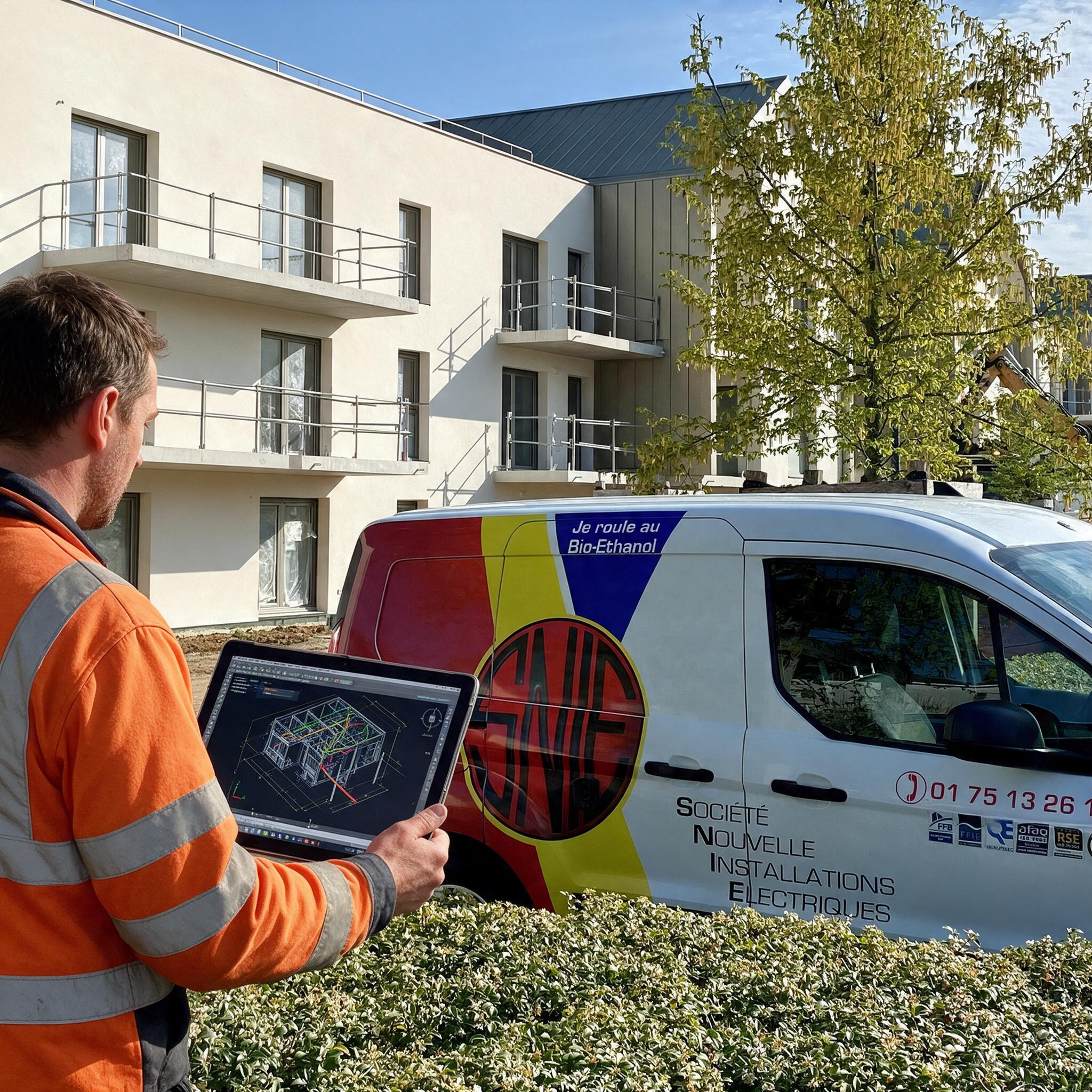
For many SMEs, the challenge is not whether to modernize, but how to do so without retraining entire teams, replacing established processes or abandoning years of accumulated design assets. This challenge is reflected in the experience of SNIE (Société Nouvelle d’Installations Électriques), a French electrical engineering company that recently reassessed its CAD software strategy.
Founded in 1966 and based in the Paris region, SNIE specializes in electrical installations for residential projects throughout Île-de-France. Its design department relies heavily on CAD tools to create, modify and manage technical documentation. Like many organizations in the sector, SNIE was confronted with a changing software landscape. The rise of subscription-based licensing models, combined with increasing software costs, prompted the company to evaluate alternative approaches to its design environment. At the same time, continuity remained a critical requirement. Any migration needed to preserve existing workflows, maintain compatibility with DWG-based processes and minimize disruption for approximately fifty design professionals. ASSE, a strategic distributor of Gstarsoft products in France, was the partner that advised and supported SNIE in overcoming this challenge.

After evaluating several alternatives, the company ultimately selected GstarCAD, the core CAD product of Gstarsoft. The decision was not driven solely by cost savings. Instead, it reflected a broader objective: preserving operational continuity while modernizing day-to-day CAD operations. According to SNIE, the transition was facilitated by the software’s familiar user environment, allowing teams to continue working with minimal retraining. Existing workflows were largely maintained, while network deployment and flexible licensing options provided additional operational flexibility. The company also reported performance improvements in daily operations, including faster drawing handling and improved output quality. More importantly, the migration demonstrated that modernizing a CAD environment does not require organizations to abandon proven workflows or absorb the cost and disruption of a full technology overhaul.
This lesson is increasingly relevant across Europe. While digital transformation pressure continues to build, the reality is that CAD remains the backbone of many engineering, construction and manufacturing workflows. For SMEs in particular, replacing existing systems entirely can be costly, disruptive and difficult to justify. As a result, many organizations are now prioritizing workflow continuity and practical, incremental upgrades over wholesale technology replacement. The experience of SNIE illustrates this broader industry trend: modernization does not have to mean starting over. For many companies, the more realistic path is to strengthen and extend the CAD environment they already rely on.
Gstarsoft’s position reflects this broader trend. Rather than pushing companies toward a full platform switch, GstarCAD is built as a familiar, DWG-based environment that lets organizations maintain existing drafting practices while addressing the cost and licensing pressures driving many CAD decisions today. For companies like SNIE, this makes it possible to modernize the CAD layer first, at a manageable pace, without committing to a broader change in design methodology.
This does not mean digital transformation is off the table. For most SMEs, it simply starts in a different place. Stabilizing cost and preserving day-to-day drafting capacity is what makes the next step affordable — whether that step is model-based delivery, cloud collaboration or AI-assisted design. Gstarsoft’s portfolio, which extends from GstarCAD to BIM and cloud-based CAD, is built so that companies can take that step when their projects require it, rather than when a licensing model forces it.
For companies navigating digital transformation, the most effective strategy may not be radical change, but controlled evolution – one that preserves existing investments while creating new opportunities for collaboration, productivity and long-term growth.
Discover more from Gstarsoft's Blog
Subscribe to get the latest posts sent to your email.